


扩展原版配方 26.2
了解如何为已有的工作站点制作自定义配方。
如果你尝试向已有的工作站点(例如锻造台、工作台或切石机)添加配方,你通常只需要创建配方类、实现其方法、注册序列化器并创建配方 JSON,因为方块、菜单和屏幕逻辑都已(由 Mojang)完成。让我们看一些示例。
概述
每个原版工作站点都有自己的 RecipeType,定义在 RecipeType 接口中。每个工作站点都需要某种特定子类型的 Recipe 才能正常工作。
WARNING
请注意,除非你修改底层的菜单,否则你的配方会受限于菜单所能提供的输入和输出。例如,锻造台有三个输入和一个输出(在原版中,它们通常是 Optional<Ingredient> template、Ingredient base、Optional<Ingredient> addition 和 ItemStackTemplate result)。然而,在 Recipe 类内部,你在配置输入以生成输出方面享有很大自由度。
锻造台
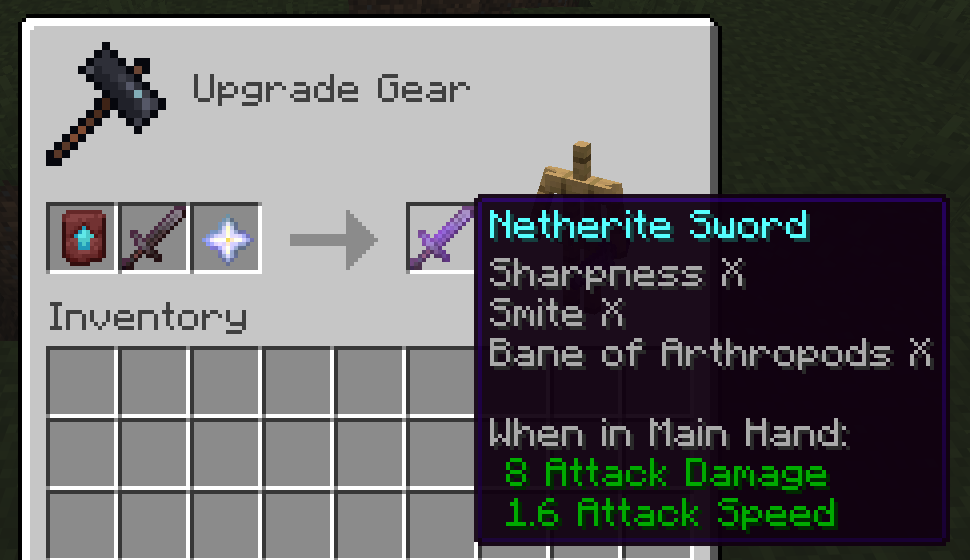
让我们创建一种新的锻造配方类型,它将魔咒应用于基础输入物品以生成输出。
锻造台需要实现 SmithingRecipe 接口的任意类型,该接口返回 RecipeTypes.SMITHING。在制作新的 SmithingRecipe 时,你可以简单地新建一个类并实现 SmithingRecipe;但另一种有效的方式是继承 SimpleSmithingRecipe(一个原版类),它已经实现了 SmithingRecipe。
java
@SuppressWarnings("OptionalUsedAsFieldOrParameterType")
public class EnchantingSmithingRecipe extends SimpleSmithingRecipe {
	private static final Codec<Integer> ENCHANTMENT_LEVEL_CODEC = Codec.intRange(1, 255);
	public static final Codec<Object2IntOpenHashMap<Holder<Enchantment>>> ENCHANTMENTS_CODEC = Codec.unboundedMap(Enchantment.CODEC, ENCHANTMENT_LEVEL_CODEC)
			.xmap(Object2IntOpenHashMap::new, Function.identity()
	);
	public static final StreamCodec<RegistryFriendlyByteBuf, Object2IntOpenHashMap<Holder<Enchantment>>> ENCHANTMENTS_STREAM_CODEC = ByteBufCodecs.map(
			Object2IntOpenHashMap::new,
			Enchantment.STREAM_CODEC,
			ByteBufCodecs.VAR_INT
	);
	public static final MapCodec<EnchantingSmithingRecipe> MAP_CODEC = RecordCodecBuilder.mapCodec(
			(instance) -> instance.group(
					CommonInfo.MAP_CODEC.forGetter((o) -> o.commonInfo),
					Ingredient.CODEC.optionalFieldOf("template").forGetter(recipe -> recipe.template),
					Ingredient.CODEC.fieldOf("base").forGetter(recipe -> recipe.base),
					Ingredient.CODEC.optionalFieldOf("addition").forGetter(recipe -> recipe.addition),
					ENCHANTMENTS_CODEC.fieldOf("enchantments").forGetter(recipe -> recipe.enchantments)
			).apply(instance, EnchantingSmithingRecipe::new)
	);
	public static final StreamCodec<RegistryFriendlyByteBuf, EnchantingSmithingRecipe> STREAM_CODEC = StreamCodec.composite(
			CommonInfo.STREAM_CODEC, recipe -> recipe.commonInfo,
			Ingredient.OPTIONAL_CONTENTS_STREAM_CODEC, recipe -> recipe.template,
			Ingredient.CONTENTS_STREAM_CODEC, recipe -> recipe.base,
			Ingredient.OPTIONAL_CONTENTS_STREAM_CODEC, recipe -> recipe.addition,
			ENCHANTMENTS_STREAM_CODEC, recipe -> recipe.enchantments,
			EnchantingSmithingRecipe::new
	);
	public static final RecipeSerializer<EnchantingSmithingRecipe> SERIALIZER = new RecipeSerializer<>(MAP_CODEC, STREAM_CODEC);
	private final Optional<Ingredient> template;
	private final Ingredient base;
	private final Optional<Ingredient> addition;
	private final Object2IntOpenHashMap<Holder<Enchantment>> enchantments;

	public EnchantingSmithingRecipe(final Recipe.CommonInfo commonInfo, final Optional<Ingredient> template, final Ingredient base, final Optional<Ingredient> addition, final Object2IntOpenHashMap<Holder<Enchantment>> enchantments) {
		super(commonInfo);
		this.template = template;
		this.base = base;
		this.addition = addition;
		this.enchantments = enchantments;
	}

	@Override
	public ItemStack assemble(SmithingRecipeInput input) {
		return applyEnchantments(input.base(), this.enchantments);
	}

	public static ItemStack applyEnchantments(ItemStack base, Object2IntOpenHashMap<Holder<Enchantment>> enchantments) {
		ItemStack result = base.copy();
		EnchantmentHelper.updateEnchantments(result, mutable -> enchantments.forEach(mutable::upgrade));
		return result;
	}

	@Override
	public RecipeSerializer<? extends SimpleSmithingRecipe> getSerializer() {
		return SERIALIZER;
	}

	@Override
	public Optional<Ingredient> templateIngredient() {
		return this.template;
	}

	@Override
	public Ingredient baseIngredient() {
		return this.base;
	}

	@Override
	public Optional<Ingredient> additionIngredient() {
		return this.addition;
	}

	@Override
	protected PlacementInfo createPlacementInfo() {
		return PlacementInfo.createFromOptionals(List.of(this.template, Optional.of(this.base), this.addition));
	}

	@Override
	public List<RecipeDisplay> display() {
		SlotDisplay base = this.base.display();
		SlotDisplay material = Ingredient.optionalIngredientToDisplay(this.addition);
		SlotDisplay template = Ingredient.optionalIngredientToDisplay(this.template);
		return List.of(new SmithingRecipeDisplay(
				template,
				base,
				material,
				new EnchantingSmithingDemoSlotDisplay(base, material, this.enchantments),
				new SlotDisplay.ItemSlotDisplay(Items.SMITHING_TABLE)
		));
	}
}哇,又是好多字。这似乎在配方文档中很常见(哈哈)。让我们来弄清楚这里发生了什么。
前几行包含我们的 Codec、MapCodec 和 StreamCodec,用于序列化和同步配方的详细信息。我们为魔咒使用了 Object2IntOpenHashMap,以便可以将任意魔咒映射到其等级。
在序列化部分之后,有前面提到的 template、base 和 addition,但与 ItemStackTemplate result 不同,我们使用的是 Object2IntOpenHashMap enchantments。
assemble 方法是自定义配方的核心,它负责在合成配方时提供输出的 ItemStack。在这种情况下,我们使用 EnchantmentHelper 中的辅助方法来应用映射表中的魔咒。
我们的 PlacementInfo 主要辅助通过配方书放置配方,而 RecipeDisplay 则有助于在配方书中展示配方。
补充说明:槽位显示
如果你尝试自己重写 display,你会很快注意到你无法为结果创建 SlotDisplay,因为你的结果是基于 base 动态生成的,而 base 是一个无法轻松从中获取 ItemStack 的 Ingredient。不过,我们在配方类中提供了一个有效的 display 重写示例。这是怎么回事?
java
public record EnchantingSmithingDemoSlotDisplay(SlotDisplay base, SlotDisplay material, Object2IntOpenHashMap<Holder<Enchantment>> enchantments) implements SlotDisplay {
	public static final MapCodec<EnchantingSmithingDemoSlotDisplay> MAP_CODEC = RecordCodecBuilder.mapCodec(
			(instance) -> instance.group(
					SlotDisplay.CODEC.fieldOf("base").forGetter(display -> display.base),
					SlotDisplay.CODEC.fieldOf("material").forGetter(display -> display.material),
					EnchantingSmithingRecipe.ENCHANTMENTS_CODEC.fieldOf("enchantments").forGetter(display -> display.enchantments)
			).apply(instance, EnchantingSmithingDemoSlotDisplay::new)
	);
	public static final StreamCodec<RegistryFriendlyByteBuf, EnchantingSmithingDemoSlotDisplay> STREAM_CODEC = StreamCodec.composite(
			SlotDisplay.STREAM_CODEC, display -> display.base,
			SlotDisplay.STREAM_CODEC, display -> display.material,
			EnchantingSmithingRecipe.ENCHANTMENTS_STREAM_CODEC, display -> display.enchantments,
			EnchantingSmithingDemoSlotDisplay::new
	);
	public static final Type<EnchantingSmithingDemoSlotDisplay> TYPE = new Type<>(MAP_CODEC, STREAM_CODEC);

	@Override
	public <T> Stream<T> resolve(ContextMap context, DisplayContentsFactory<T> factory) {
		RandomSource randomSource = RandomSource.createThreadLocalInstance(System.identityHashCode(this));
		BinaryOperator<ItemStack> transformation = (base, material) -> EnchantingSmithingRecipe.applyEnchantments(base, this.enchantments);
		return SlotDisplayAccessor.applyDemoTransformation(context, factory, this.base, this.material, randomSource, transformation);
	}

	@Override
	public Type<? extends SlotDisplay> type() {
		return TYPE;
	}
}我们创建了一个 SlotDisplay 的自定义实现。这个特定实现允许显示带有指定魔咒的结果。
在我们的 resolve 方法中,我们首先创建一个 RandomSource 和一个 BinaryOperator<ItemStack>,然后将两者传递给 SlotDisplay.applyDemoTransformation(它是静态的但为私有,所以我们需要一个 Mixin invoker)。
java
@Mixin(SlotDisplay.class)
public interface SlotDisplayAccessor {
	@Invoker("applyDemoTransformation")
	static <T> Stream<T> applyDemoTransformation(final ContextMap context, final DisplayContentsFactory<T> factory, final SlotDisplay firstDisplay, final SlotDisplay secondDisplay, final RandomSource randomSource, final BinaryOperator<ItemStack> operation) {
		throw new AssertionError("Untransformed @Accessor");
	}
}applyDemoTransformation 允许对在 SlotDisplay 中显示的 ItemStack 应用变更。它接收一个 BinaryOperator<ItemStack>,以便可以根据 material 修改 base 的数据。这对于像纹饰配方这样的情况很有用,在此类配方中,结果的纹饰颜色会根据材料的不同而有所变化。但是,我们直接将魔咒应用到基础物品堆上,而忽略材料(配方仅在允许合成前检查是否存在正确的材料),因此我们实际上可以在 SlotDisplay 实现中省略 material 字段(此时会传入 SlotDisplay.Empty.INSTANCE 代替 material 传给 applyDemoTransformation)。
最后,我们需要注册配方序列化器和槽位显示类型。
java
Registry.register(BuiltInRegistries.RECIPE_SERIALIZER, ExampleMod.id("smithing_enchanting"), EnchantingSmithingRecipe.SERIALIZER);
Registry.register(BuiltInRegistries.SLOT_DISPLAY, ExampleMod.id("enchanting_smithing"), EnchantingSmithingDemoSlotDisplay.TYPE);INFO
这个配方仍然是数据驱动的。
json
{
  "type": "example-mod:smithing_enchanting",
  "template": "minecraft:netherite_upgrade_smithing_template",
  "base": "minecraft:netherite_sword",
  "addition": "minecraft:nether_star",
  "enchantments": {
    "minecraft:sharpness": 10,
    "minecraft:smite": 10,
    "minecraft:bane_of_arthropods": 10
  }
}
工作台
在制作新的合成配方时也会遇到类似的情况。预期的类型是 CraftingRecipe 接口,如果 ShapedRecipe(有序合成配方)和 ShapelessRecipe(无序合成配方)不够用,那么我们建议你继承 CustomRecipe。我们鼓励你查看目标工作站点配方接口的子类型,看看是否能找到符合你需求的接口。
作为示例,让我们创建一个自定义合成配方,允许将药水注入谜之炖菜中。
java
// Thank you to lynndova for the recipe name
public class StewSpikingCraftingRecipe extends CustomRecipe {
	public static final StewSpikingCraftingRecipe INSTANCE = new StewSpikingCraftingRecipe();
	public static final MapCodec<StewSpikingCraftingRecipe> CODEC = MapCodec.unit(INSTANCE);
	public static final StreamCodec<RegistryFriendlyByteBuf, StewSpikingCraftingRecipe> STREAM_CODEC = StreamCodec.unit(INSTANCE);
	public static final RecipeSerializer<StewSpikingCraftingRecipe> SERIALIZER = new RecipeSerializer<>(CODEC, STREAM_CODEC);

	@Override
	public boolean matches(CraftingInput input, Level level) {
		return getItemsFromInput(input) != null;
	}

	@Override
	public ItemStack assemble(CraftingInput input) {
		StewAndPotions ingredients = getItemsFromInput(input);

		if (ingredients == null) {
			return ItemStack.EMPTY;
		}

		ItemStack suspiciousStew = ingredients.stew().copy();
		SuspiciousStewEffects originalEffects = suspiciousStew.getOrDefault(DataComponents.SUSPICIOUS_STEW_EFFECTS, SuspiciousStewEffects.EMPTY);

		// We use a TreeMap to hopefully correctly compare Holder<MobEffect>s.
		Map<Holder<MobEffect>, Integer> effects = new TreeMap<>(
				(one, two) -> {
					//noinspection deprecation
					if (one == two || one.is(two)) {
						return 0;
					}

					return one.toString().compareTo(two.toString());
				}
		);

		originalEffects.effects().forEach(entry -> effects.put(entry.effect(), entry.duration()));

		for (ItemStack potion : ingredients.potions()) {
			float durationScale = potion.getOrDefault(DataComponents.POTION_DURATION_SCALE, 1F);
			PotionContents potionContents = potion.get(DataComponents.POTION_CONTENTS);

			// This is fine because we checked for the presence of the component in getItemsFromInput.
			//noinspection DataFlowIssue
			potionContents.getAllEffects().forEach(instance -> {
				Holder<MobEffect> effect = instance.getEffect();
				int duration = effects.getOrDefault(effect, 0);

				if (duration == MobEffectInstance.INFINITE_DURATION) {
					return;
				}

				duration = Math.max(Mth.floor(instance.getDuration() * (instance.getAmplifier() + 1) * durationScale), duration);
				effects.put(effect, duration);
			});
		}

		suspiciousStew.set(
				DataComponents.SUSPICIOUS_STEW_EFFECTS,
				new SuspiciousStewEffects(
						effects.entrySet()
								.stream()
								.map(entry ->
										new SuspiciousStewEffects.Entry(
												entry.getKey(), entry.getValue()
										)
								)
								.toList()
				)
		);
		return suspiciousStew;
	}

	@Nullable
	public static StewAndPotions getItemsFromInput(CraftingInput input) {
		List<ItemStack> items = input.items();

		if (items.size() <= 1) {
			return null;
		}

		ItemStack stew = ItemStack.EMPTY;
		ImmutableList.Builder<ItemStack> builder = ImmutableList.builder();

		for (ItemStack stack : input.items()) {
			if (stack.is(Items.SUSPICIOUS_STEW)) {
				if (!stew.isEmpty()) {
					/*
					If the stew is not empty, then there are two suspicious stews in our input.
					Therefore, we return null, as this is no longer a valid input.
					 */
					return null;
				}

				stew = stack;
			} else if (stack.has(DataComponents.POTION_CONTENTS)) {
				builder.add(stack);
			} else {
				return null;
			}
		}

		if (stew.isEmpty()) {
			return null;
		}

		List<ItemStack> potions = builder.build();

		if (potions.isEmpty()) {
			return null;
		}

		return new StewAndPotions(stew, potions);
	}

	@Override
	public RecipeSerializer<? extends CustomRecipe> getSerializer() {
		return SERIALIZER;
	}

	public record StewAndPotions(ItemStack stew, List<ItemStack> potions) {
	}
}一如既往,我们需要注册配方序列化器。
java
Registry.register(BuiltInRegistries.RECIPE_SERIALIZER, ExampleMod.id("stew_spiking"), StewSpikingCraftingRecipe.SERIALIZER);INFO
这个配方仍然是数据驱动的。
json
{
  "type": "example-mod:stew_spiking"
}我们只需要类型,以便 Minecraft 知道我们要加载该配方。
嘘,别告诉任何人! >:)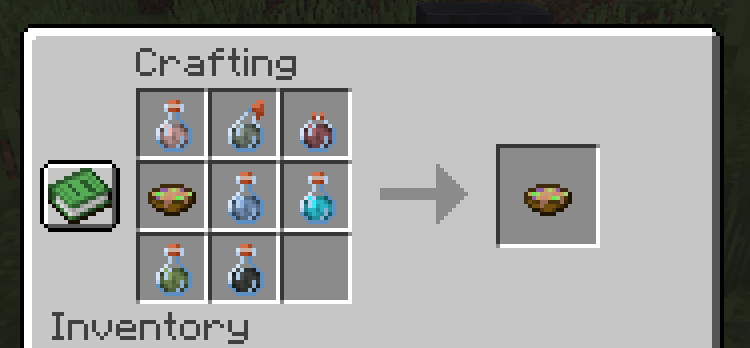
切石机
切石机配方在 RecipeManager/RecipeAccess 中与其他 Recipe 是分开的,因为切石机需要在给定单个输入时显示并选择其所有有效的配方(带有配方书的菜单是通过 ClientRecipeBook 处理的,服务器将必要的配方发给客户端)。只需继承 StonecutterRecipe(与其他类不同,这并不是一个接口!)并重写 assemble 方法,除了单纯制作切石配方 JSON 外,就能适用于绝大多数使用场景。